Research & Education
Without a Shower…
Who Are You?
A shower may seem like a small thing.
But it quietly shapes how we move through the world. It affects how we see ourselves… and how others see us.
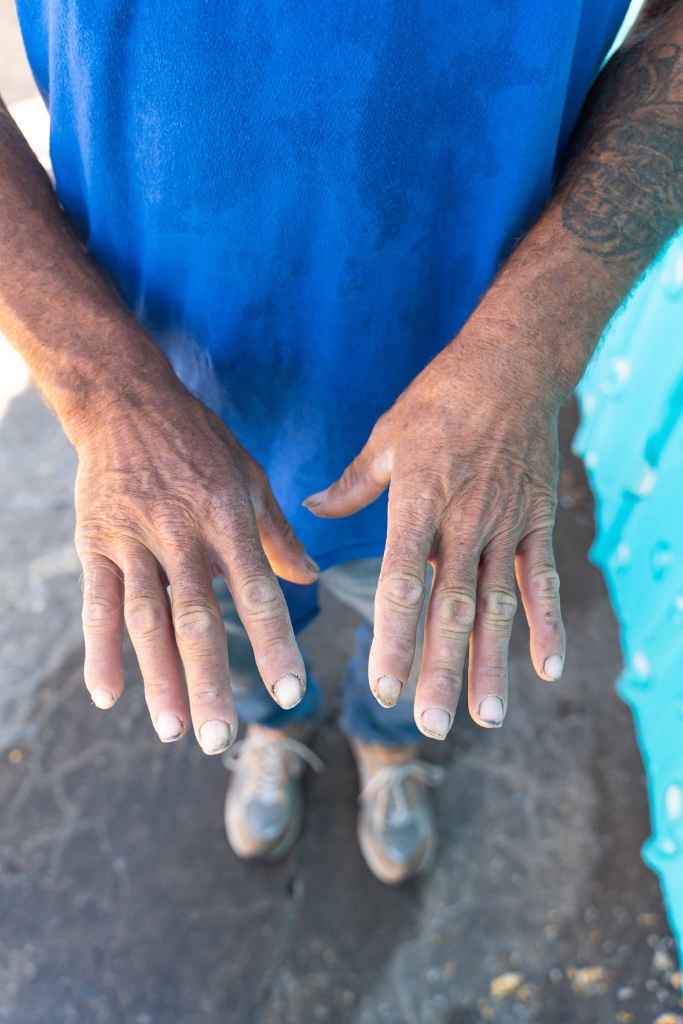

Neighbors at a BeHeard outreach event.
The Gap
The need is bigger than
our current capacity.
One night. Two cities.
3,331
people experiencing homelessness in Tulsa + OKC
Tulsa 1,449 · OKC 1,882 · 2025 PIT Counts
BeHeard's current capacity
8
Showers
across BeHeard trailers
14
Washers + 14 Dryers
across BeHeard trailers
That's roughly 1 shower for every 416 people.
And 1 washer for every 238 people.
In the latest verified Point-in-Time counts, Tulsa identified 1,449 people experiencing homelessness and Oklahoma City identified 1,882 — a combined total of 3,331 people on a single night. BeHeard is responding with mobile showers and laundry, but the gap is still massive. This is why more trailers, more shower access, and more laundry capacity matter.
Dignity should not be this scarce.
Point-in-Time counts are one-night snapshots and likely undercount the true number of people experiencing homelessness. Tulsa 2025 PIT: 1,449. OKC 2025 PIT: 1,882.
Take a Moment
Imagine yourself in this situation.
If you went 90 days without a shower:
- →How would your mental health change?
- →How would people treat you in public?
- →Would you feel comfortable sitting next to someone?
- →Would you feel confident walking into a job interview?
- →Would you still feel like yourself?
For many neighbors experiencing homelessness, this is not a thought experiment.
It is daily reality.
Access to hygiene is not just about cleanliness. It is about identity, dignity, and belonging.
Understanding the Issue
What is Hygiene Insecurity?
For most people, showers, laundry, and hygiene products are everyday routines.
For many neighbors experiencing homelessness, they are some of the hardest things to access.
This gap is called hygiene insecurity — the lack of reliable access to basic sanitation resources like showers, bathrooms, laundry, and hygiene supplies.
When hygiene is inaccessible, it affects far more than cleanliness. It affects health, dignity, employment, and mental well-being.
The Reality
Hygiene Insecurity by the Numbers
Many people experiencing homelessness report going weeks or months without a shower.
Lack of hygiene access increases risk of skin infections, illness, and social exclusion.
Hygiene barriers often prevent individuals from securing employment or attending interviews.
In some cities, citations related to survival behaviors can lead to fines and legal barriers that prolong homelessness.
The Hidden Reality
The Ripple Effects of Hygiene Insecurity
Limited Access to Sanitation
Many people experiencing homelessness face significant barriers to basic hygiene facilities like showers, handwashing stations, and laundry. Access to sanitation is considered a basic human right, yet many unhoused individuals lack consistent access to water, toilets, and showers.
Hygiene Barriers Create Health Risks
Without access to hygiene facilities, people experiencing homelessness face increased risks of infections, skin conditions, parasites, and other preventable illnesses. Poor sanitation environments can also contribute to outbreaks of communicable diseases such as hepatitis A.
Stigma Reinforces Cycles of Poverty
When people cannot maintain personal hygiene, they often experience social stigma and discrimination that reinforce cycles of poverty and exclusion. This stigma can make it nearly impossible to re-enter the workforce or reconnect with community support systems.
Hygiene Impacts Employment
Access to hygiene products and clean clothing directly affects a person's ability to attend school or maintain employment. Clean clothes, showers, and grooming are often basic expectations for job interviews and workplaces. Without them, opportunities disappear.
The Psychological Impact
Hygiene is not just physical — it is deeply connected to mental health and identity. When someone cannot bathe regularly, wash their clothes, or care for themselves, it can lead to shame, isolation, depression, loss of confidence, and withdrawal from social interactions.
Hygiene Timeline
What Happens Without Access
The effects of hygiene insecurity compound rapidly over time.
- Skin begins to dry and flake
- Body odor becomes noticeable
- Risk of minor skin irritation increases
- Social interactions become uncomfortable
- Risk of skin infections rises significantly
- Hair and scalp conditions develop
- Psychological effects like shame and isolation begin
- Employability decreases noticeably
- Serious skin conditions and infections likely
- Risk of parasites (lice, scabies) increases
- Depression and social withdrawal deepen
- Barriers to employment become severe
By the Numbers
Homelessness in Tulsa, OKC & Beyond
Data from the most recently verified Point-In-Time (PIT) counts for Tulsa and Oklahoma City (2025), and HUD's national report (2024).
1,449
People experiencing homelessness in Tulsa
Single-night count, up 4.3% from 2024
Source: Tulsa 2025 PIT Count
1,882
People experiencing homelessness in OKC
Single-night count, up 2.4% from 2024
Source: OKC 2025 PIT Count
771,480
People experiencing homelessness nationally
The highest number ever recorded by HUD
Source: HUD 2024 Annual Homeless Assessment Report
82%
of Tulsa's unhoused population became homeless in Oklahoma
75% said homelessness began right here in Tulsa
Source: Tulsa 2025 PIT Count
1 in 4
people counted in Tulsa were age 55 or older
Nearly all reported at least one disability
Source: Tulsa 2025 PIT Count
39%
rise in family homelessness nationally
Nearly 150,000 children experienced homelessness in a single night in 2024
Source: HUD 2024 Annual Homeless Assessment Report
Oklahoma City — Unsheltered & Chronic
- 421 people were unsheltered in OKC in 2025 — sleeping outside or in places not meant for habitation — the lowest unsheltered count in five years.
- 433 people were counted as chronically homeless in OKC in 2025, a 9% decrease from 2024. The share who were unsheltered dropped from 44% to 32%.
Source: OKC 2025 PIT Count
Families & Children in Tulsa
- 13% of everyone counted in Tulsa's 2025 PIT count were people in families with children, including more than 100 minors.
- PIT counts are only a snapshot. OKC's report notes the count does not include people doubled up with family or friends, in jail, in treatment facilities, or in emergency rooms.
Source: Tulsa & OKC 2025 PIT Counts
$20.98
per hour
The housing wage in Oklahoma
A worker in Oklahoma needs to earn $20.98 an hour to afford a modest 2-bedroom home at fair market rent — while the state minimum wage remains $7.25 an hour.
Source: National Low Income Housing Coalition, Out of Reach Report
Hygiene & Justice Involvement
When Hygiene Is Missing, Systems Respond
Lack of access to hygiene can create situations that unintentionally pull people into the justice system.
Across the United States, many citations and arrests tied to homelessness stem from survival behaviors — sleeping outside, washing in public spaces, or trying to meet basic needs where services are unavailable.
Without access to showers, bathrooms, and laundry, people may be cited for:
- Public hygiene violations
- Loitering
- Sleeping in public
- Trespassing while trying to access restrooms or water
- Camping ordinances
These citations can lead to fines that are impossible to pay, which sometimes escalate into warrants or additional legal consequences.
For individuals already experiencing instability, this creates another barrier to exiting homelessness.
In many cases, lack of access to hygiene services becomes an entry point into the justice system rather than a pathway to stability.
Consider This
If you lost access tomorrow…
- →How long could you maintain your job?
- →How would people treat you in public spaces?
- →How long before you felt isolated?
- →How long before basic survival decisions became legal risks?
For many neighbors experiencing homelessness, these decisions are made every day.
The Gateway Effect
Hygiene as a First Step to Stability
A shower may seem simple. But for many, it becomes the first step toward something much greater.
Why It Matters
A Shower Can Change the Direction of a Day
These moments may seem small. But they are often the first step toward stability.
When you support hygiene services, you are not just funding showers.
You are restoring dignity, opportunity, and connection.
Why BeHeard
Dignity Starts With the Basics
At BeHeard, we believe the first step toward stability begins with something as simple as a warm shower and clean clothes. Our mobile drop-in center provides: